THE JOURNEY MAPPING - Make Your Website Make Sense.
If you missed the earlier article on why SEO collapses without structure, here’s the full breakdown. In How Structured SEO Scales, we discussed why SEO fails when websites behave like a collection of loose parts instead of a structured system. But there’s a deeper layer beneath that system — the behaviour of real users. Even the best system collapses if it doesn’t respect how humans think, skim, review, doubt, and finally decide. Journey Mapping is simply the practice of understanding this invisible pattern.
Journey Mapping is the part of SEO where psychology meets structure.
It has nothing to do with tools, keywords, robots, or algorithms. It has everything to do with how a human brain moves when presented with choices.
THE USER’S MIND HAS ITS OWN ORDER — AND IT’S NON-NEGOTIABLE
Structured SEO is the opposite of one-off optimisation.
It’s a governance model for search performance
— how your content, links, and analytics talk to each other.
Visitors don’t see your website like you do. They don’t enter with your context, your history, or your understanding of your product. They arrive cold, curious, confused, hopeful, distracted, and often impatient. Yet every user carries a hidden script — a mental blueprint about how to make sense of anything new.
They first seek clarity,
then seek confidence,
and only then seekclosure,
This silent flow mirrors everyday Indian behaviour.
Think of something as ordinary as planning a Pune–Mahabaleshwar weekend drive. You first check weather, route, and time — not prices. You then shortlist hotels and compare them. Only when you’re mentally satisfied, you check availability and book. The journey unfolds in steps, even if you’re not conscious of it.
Your website visitors behave exactly the same way. Search Intent explains why people take this path — and how Google interprets it.
We fixed a similar ‘messy-store’ problem for a 700+ SKU kids brand — see how structure changed everything. A website without Journey Mapping feels like a messy kirana store — shampoo next to toor dal, diapers next to biscuits. People don’t stop buying shampoo because shampoo is bad; they stop because nothing makes sense. Confusion kills conversions. The illustration above visualises this contrast and should sit right here.
THE THREE NATURAL MOVEMENTS OF A USER JOURNEY
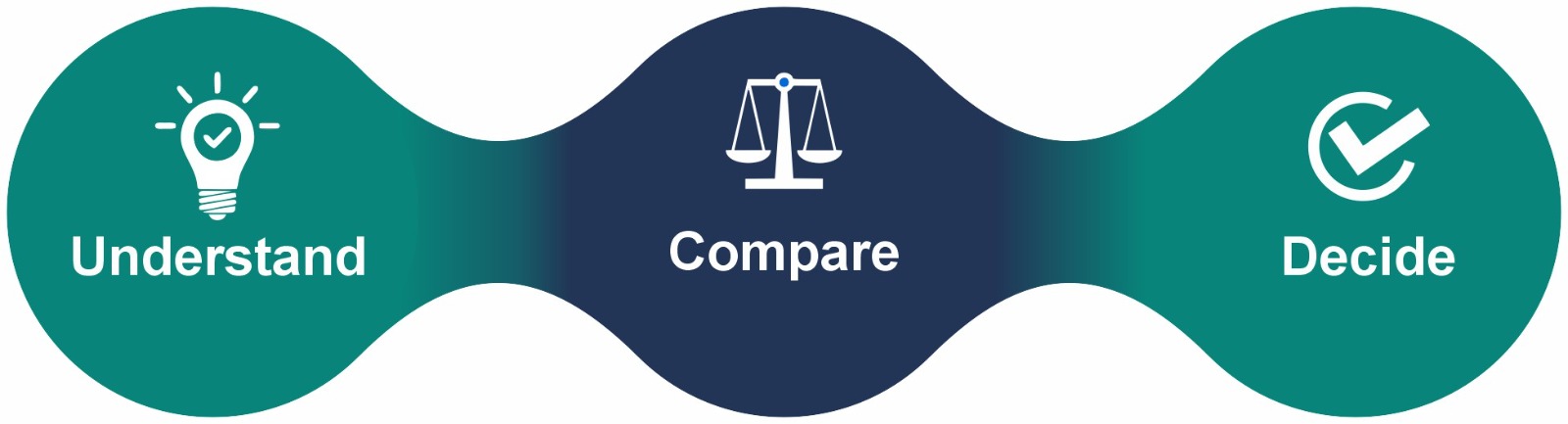
Every visitor, whether they’re buying a Dubai apartment or a ₹699 mixer grinder, experiences three predictable subconscious stages:
They try to understand.
They try to compare.
They try to decide.
These movements make sense only when your website architecture respects them — explained fully in our Structured SEO article.
This is not marketing theory; it is centuries-old human cognition. Websites fail not because people don’t want to buy, but because the website doesn’t respect the order of these steps. Journey Mapping corrects this by visually mapping what pages help users understand, what pages help them compare, and what pages help them decide.
A REAL INDIAN EXAMPLE — SCHOOL ADMISSION SEARCH BEHAVIOUR
A parent in Noida doesn’t directly search “admission form DPS Sector 30 fee structure” on day one. Their first query is far simpler:
CBSE vs ICSE difference — they want clarity.
The next query becomes:
“Best CBSE schools near me” — they want comparisons.
Finally, they land on:
“DPS Noida admission dates 2025 fees form” — they want closure.
If your school website mixes “fees” inside long blogs, or hides “admission form” near the footer, the journey breaks instantly.
This is where most websites silently leak revenue.This same behaviour gap caused drop-offs in a SaaS brand — see how Intent Mapping reversed the leakage.
| Stage | What the User Feels | What They Need | Page Type |
|---|---|---|---|
| Understand | Confusion | Clarity | Explainer Page |
| Compare | Doubt | Confidence | Case Studies / Comparison |
| Decide | Hesitation | Direction | Pricing / Contact / CTA |
THE PURPOSE OF JOURNEY MAPPING
Journey Mapping is not a UX exercise, not a content exercise, and not an SEO exercise. It is a behaviour exercise. Its job is to design a flow where each page does only one job — and does it extraordinarily well. A good journey map doesn’t add more pages; it reduces cognitive load. Once this behavioural layer is clear, Search Intent becomes far easier to get right. If Journey Mapping explains how people move through your website, Search Intent explains why they came through Google in the first place.
If you want a 30-minute discussion on how Journey Mapping applies to your own website and where your biggest journey leaks might be, you can book a call with us — no obligations, just clarity.
Contact with UsStructured SEO transforms marketing from a cost centre into an engine of measurable growth — one that compounds even when you’re not watching.
If you want to see how behaviour & structure translate into measurable results, here’s the full story.
PCG DigiVerse helps organisations build behaviour-led website journeys that turn confusion into clarity — and turn every user visit into a predictable path toward conversion.